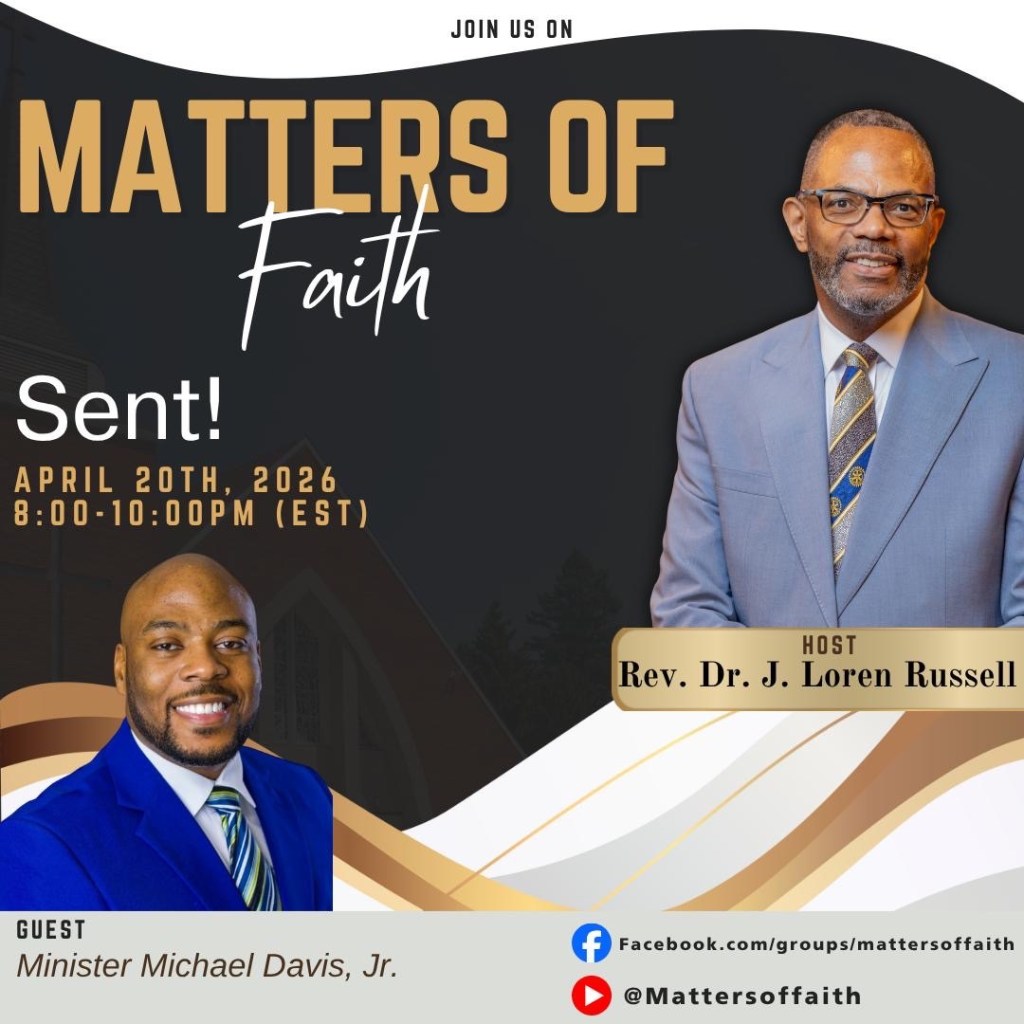
Matters of Faith
A practical application of the Word of God for everyday issues.
-
“Sent”
Rev. J. Loren Russell
Matthew 10:16-20 ( NKJV)
“Behold, I send you out as sheep in the midst of wolves. Therefore be wise as serpents and harmless as doves. 17 But beware of men, for they will deliver you up to councils and scourge you in their synagogues. 18 You will be brought before governors and kings for My sake, as a testimony to them and to the Gentiles. 19 But when they deliver you up, do not worry about how or what you should speak. For it will be given to you in that hour what you should speak; 20 for it is not you who speak, but the Spirit of your Father who speaks in you.”
When Jesus speaks in Gospel of Matthew 10:16–20, He doesn’t just give instructions—He defines identity. To be sent is to move with purpose that didn’t originate with you. It means your life is not random, your placement is not accidental, and your voice is not self-assigned. There is intention behind where you are and who you’re reaching.
But being sent is not the same as being sheltered. “Sheep in the midst of wolves” is a clear-eyed description of reality. You are placed in environments that require awareness, not avoidance. That’s why Jesus pairs wisdom with harmlessness. If you are sent, you must see clearly—but you must also remain clean in how you respond.
In practical terms, being sent into your workplace means you don’t just show up to complete tasks—you discern culture, dynamics, and pressures with wisdom. You don’t ignore manipulation or confusion, but you also don’t adopt those methods to survive. You remain honest, steady, and grounded. You represent something higher than the room, even while fully engaging in it.
Being sent into relationships means you don’t give yourself blindly, nor do you withhold yourself out of fear. Wisdom helps you recognize where boundaries are needed; harmlessness ensures those boundaries are expressed without bitterness. You stay open without becoming careless and guarded without becoming hardened.
Being sent into conversations—especially difficult or public ones—means you don’t speak just to react. You listen, discern, and respond with clarity. Not every moment requires your voice, but when you do speak, your words carry both truth and restraint. You’re not trying to win, you’re representing.
And then there are those moments Jesus describes so vividly—when you’re put on the spot, misunderstood, or challenged beyond your preparation. Being sent means you trust that what you need will meet you there. Not because you rehearsed perfectly, but because you’re aligned. There is a kind of courage and clarity that shows up in the moment for those who are walking in step with the one who sent them, not just those who feel fully ready.
It’s also important to hold this truth with balance: being sent doesn’t always feel like a perfectly timed release. Some step forward with strong conviction and discover along the way what still needs shaping. That isn’t failure—it’s formation. The issue isn’t simply moving; it’s moving with humility. Those who stay responsive to God can be corrected, refined, and redirected mid-step. Being sent is not about flawless starts; it’s about faithful continuation.
So Sent is not just a title, it’s a posture. It means you walk into every space aware that you are both equipped and accountable. You are sharp, but not harsh. Gentle, but not naïve. Active, but not self-driven.
And here’s the anchor that holds it all together: if you were sent, then you are not alone in what you face, and you are not empty-handed in what you carry. The same voice that commissioned you is the one that will sustain you—guiding your steps, shaping your words, and steadying your spirit. You are not just going. You are Sent.
Be Blessed!
-
Get the ebook at
-
Rev. J. Loren Russell
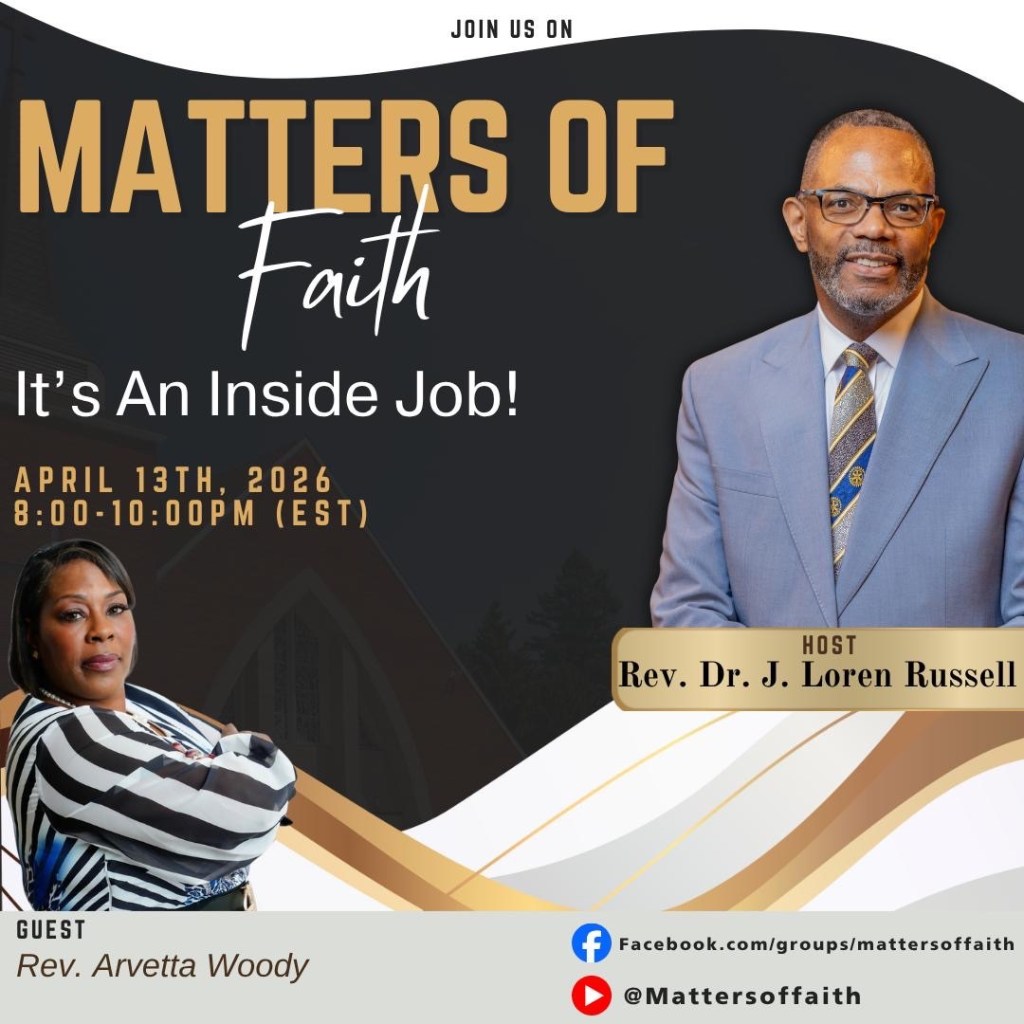
Ephesians 4:25-32 ( NKJV)
“25 Therefore, putting away lying, “Let each one of you speak truth with his neighbor,” for we are members of one another. 26 “Be angry, and do not sin”: do not let the sun go down on your wrath, 27 nor give place to the devil. 28 Let him who stole steal no longer, but rather let him labor, working with his hands what is good, that he may have something to give him who has need. 29 Let no corrupt word proceed out of your mouth, but what is good for necessary edification, that it may impart grace to the hearers. 30 And do not grieve the Holy Spirit of God, by whom you were sealed for the day of redemption. 31 Let all bitterness, wrath, anger, clamor, and evil speaking be put away from you, with all malice. 32 And be kind to one another, tenderhearted, forgiving one another, even as God in Christ forgave you.”
It is not the actions of people that tell us who they are, it’s their reaction that reveals their true character. What comes out of someone when they are squeezed reveals what’s on the inside.
Paul’s letter to the Ephesian church directs his readers to put away lying, which means they had, at some point, been liars. He says they can be angry, but not to sin, which means they had been angry and chose to sin. He tells them not to allow the devil to infiltrate their hearts, which means at some point in their past, they routinely “danced with the devil”.
Paul says that they should steal no longer, which means they had stolen before. He says they must work that which is good so that they have something in their storehouse to give to those in need. Even the words they speak should be edifying, which means they had previously spoken corrupt words that unsettled the lives of others. These weren’t just behavioral corrections—they were matters of the heart.
Notice that all the things Paul directed them to do were things that had to come out of them when life’s pressures were upon them. That’s why transformation cannot be cosmetic. It must be internal. You can modify behavior for a moment, but only the Holy Spirit can change nature for a lifetime.
Jesus said it plainly: “Not what goes into the mouth defiles a man; but what comes out of the mouth, this defiles a man” (Matthew 15:11). In other words, the real issue isn’t what happens to you…, it’s what comes out of you, and nothing can come out of you that wasn’t already in you.
So, the question becomes: What is living in your heart? Whatever is in you will come out of you. The evidence of spiritual maturity is not how you act when everything is right, but how you respond when everything is wrong. That’s why real change, true, lasting, God-honoring transformation, is always an inside job.
Be Blessed!
-
Rev. J. Loren Russell
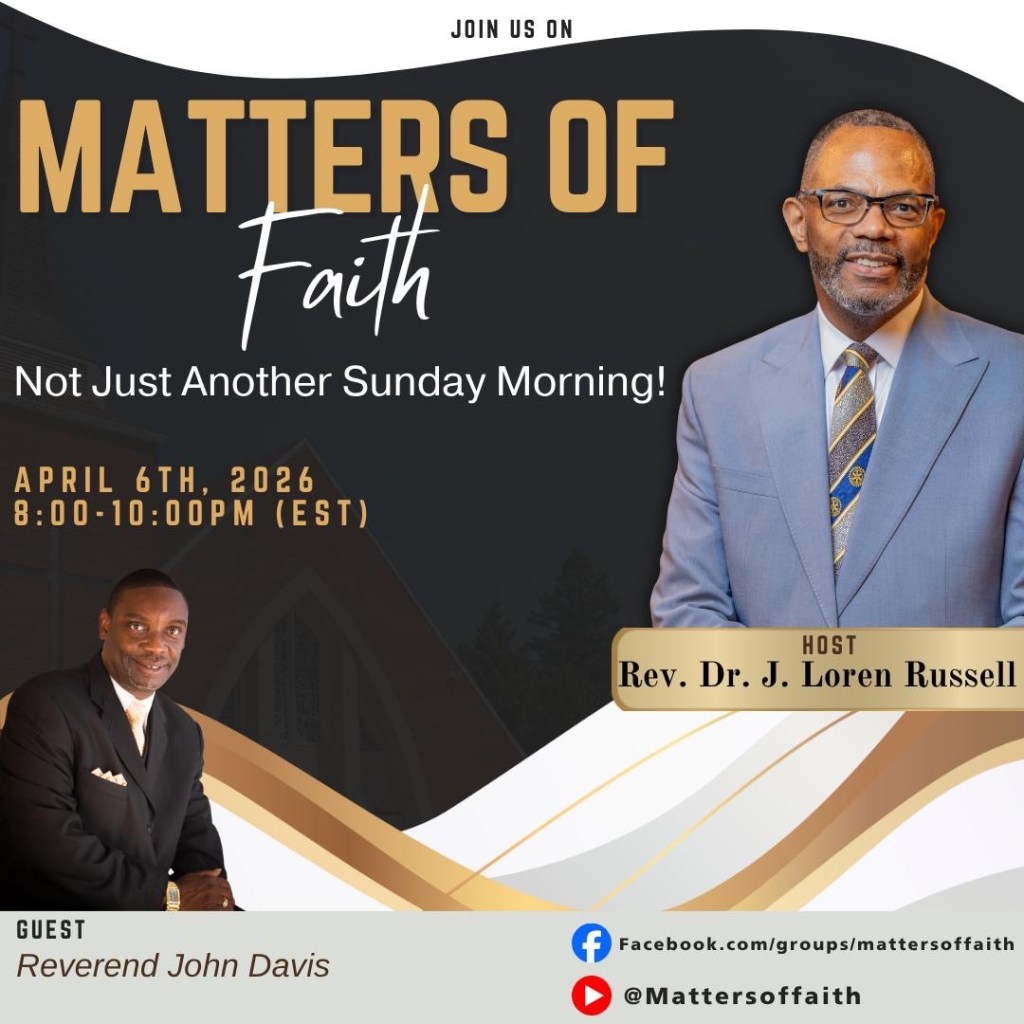
SCRIPTURE: (Mark 16:1-6 ( NKJV)
“Now when the Sabbath was past, Mary Magdalene, Mary the mother of James, and Salome bought spices, that they might come and anoint Him. 2 Very early in the morning, on the first day of the week, they came to the tomb when the sun had risen. 3 And they said among themselves, “Who will roll away the stone from the door of the tomb for us?” 4 But when they looked up, they saw that the stone had been rolled away—for it was very large. 5 And entering the tomb, they saw a young man clothed in a long white robe sitting on the right side; and they were alarmed.
6 But he said to them, “Do not be alarmed. You seek Jesus of Nazareth, who was crucified. He is risen! He is not here. See the place where they laid Him. 7 But go, tell His disciples—and Peter—that He is going before you into Galilee; there you will see Him, as He said to you.”
It was early Sunday morning, the end of the Sabbath and first day of the week, when Mary Magdalene, Mary the mother of James, and Salome decided to follow the custom of the Jews and go to the graveyard. They made their way to the tomb carrying spices in their hands, but sorrow in their hearts. They came to anoint a body… not expecting a miracle. As they walked, a question weighed on their minds: “Who will roll away the stone?” The stone was massive, immovable by human strength. It represented finality, death, and the end. But when they arrived, the stone had already been rolled away.
They entered the tomb expecting to find a lifeless prophet, but instead, they encountered a divine messenger. A young man clothed in white, sitting where death had once claimed victory. Recognizing their fear, he spoke: “Do not be alarmed. You seek Jesus of Nazareth, who was crucified… He is risen! He is not here.” Luke 24:5 records that encounter a little differently; he says they were asked, “Why seek ye the living among the dead?”
It is a question that still echoes today: Why do we look for peace in places that cannot sustain us? Why do we search for fulfillment in things that have no life in them? Why do we expect God to move in places He has already left behind?
The women came to the tomb in mourning—but they did not leave the same way. They were given a message and a mission: “Go, tell His disciples… and Peter.”
That detail matters. Peter, who had denied Jesus, was still being called. His failure did not disqualify him from being included in the resurrection story. Grace made sure of that. And by that same grace, we are not that different from Peter. We are included in the resurrection narrative also.
Yet even with good news, fear took hold. Mark tells us they were afraid. Fear has a way of silencing us, even when we have encountered something life-changing. It can cause us to hesitate when we should speak, to hold back when we should move forward.
Still, the story does not end there. Jesus appeared to Mary Magdalene, and she went and told the disciples. Though they struggled to believe at first, something began to shift. By the end of the chapter, those who once doubted were boldly proclaiming the message everywhere, and the Lord was working with them.
What made the difference? The resurrection!
That Sunday morning was not typical because it marked the turning point of history. Death no longer had the final word. The grave no longer held ultimate power. Hope, which seemed buried, had risen.
And that same truth speaks to us now. Whatever “stone” stands in your way—God is able to move it. Whatever situation feels lifeless—God is able to bring life to it. Whatever grief you carry—God can transform it into purpose.
The women came expecting to anoint a body, but instead they encountered a living Savior. Their sorrow was interrupted by hope. Their routine was disrupted by resurrection power. This was not just another Sunday morning.
It was Resurrection Day.
And because of that, no day has to remain ordinary again.
Be Blessed!

 Matters of Faith